DIRECT-APPLIED + SUSPENDED ACOUSTIC PANELS
Acoustic Wall & Ceiling Panels
Acoustic panels add sound absorption to walls and ceilings where hard finishes would otherwise reflect too much sound. Panels may be direct-applied, mechanically fastened, suspended or integrated into a larger feature assembly, with material, edge, joint, impact resistance and mounting method selected for the room.
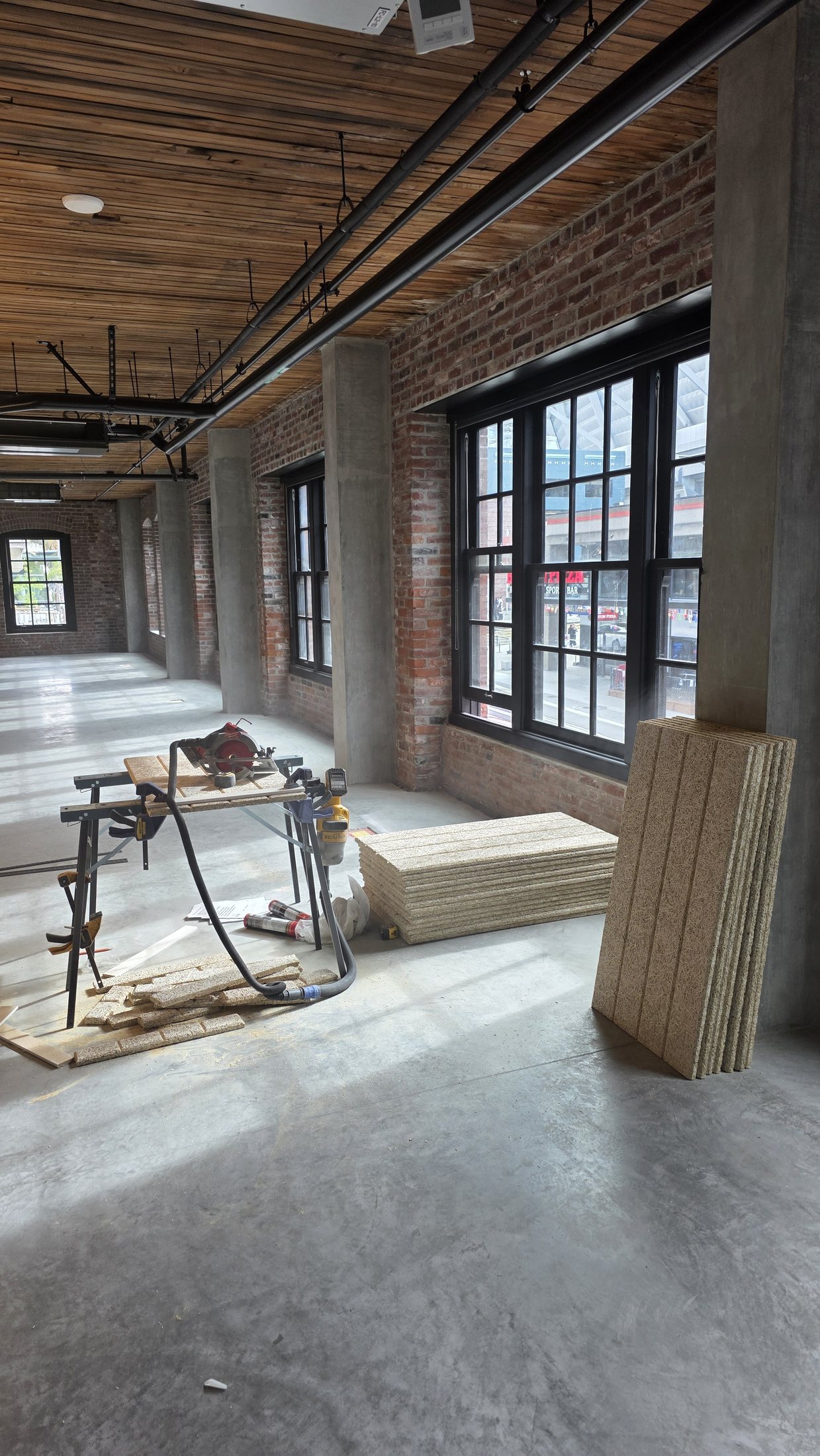
SYSTEM OVERVIEW
What to understand before you specify.
Acoustic Wall & Ceiling Panels should be selected as a complete ceiling assembly rather than by appearance alone. Material, module geometry, suspension, access, acoustics, fire performance, service integration and perimeter details all affect how the finished ceiling performs and how efficiently it can be installed.
ACUSTIQ organizes these decisions into practical system guidance so owners, designers, contractors and estimators can move from early inspiration into a coordinated ceiling concept. Once a manufacturer product is selected, its verified technical documents and tested values take priority over generic system guidance.
REAL INSTALLATION REFERENCES
Acoustic Wall & Ceiling Panels in the field.
Real contractor and legacy project photography. Captions identify only what the photograph supports; unverified addresses, products and project names are not invented.
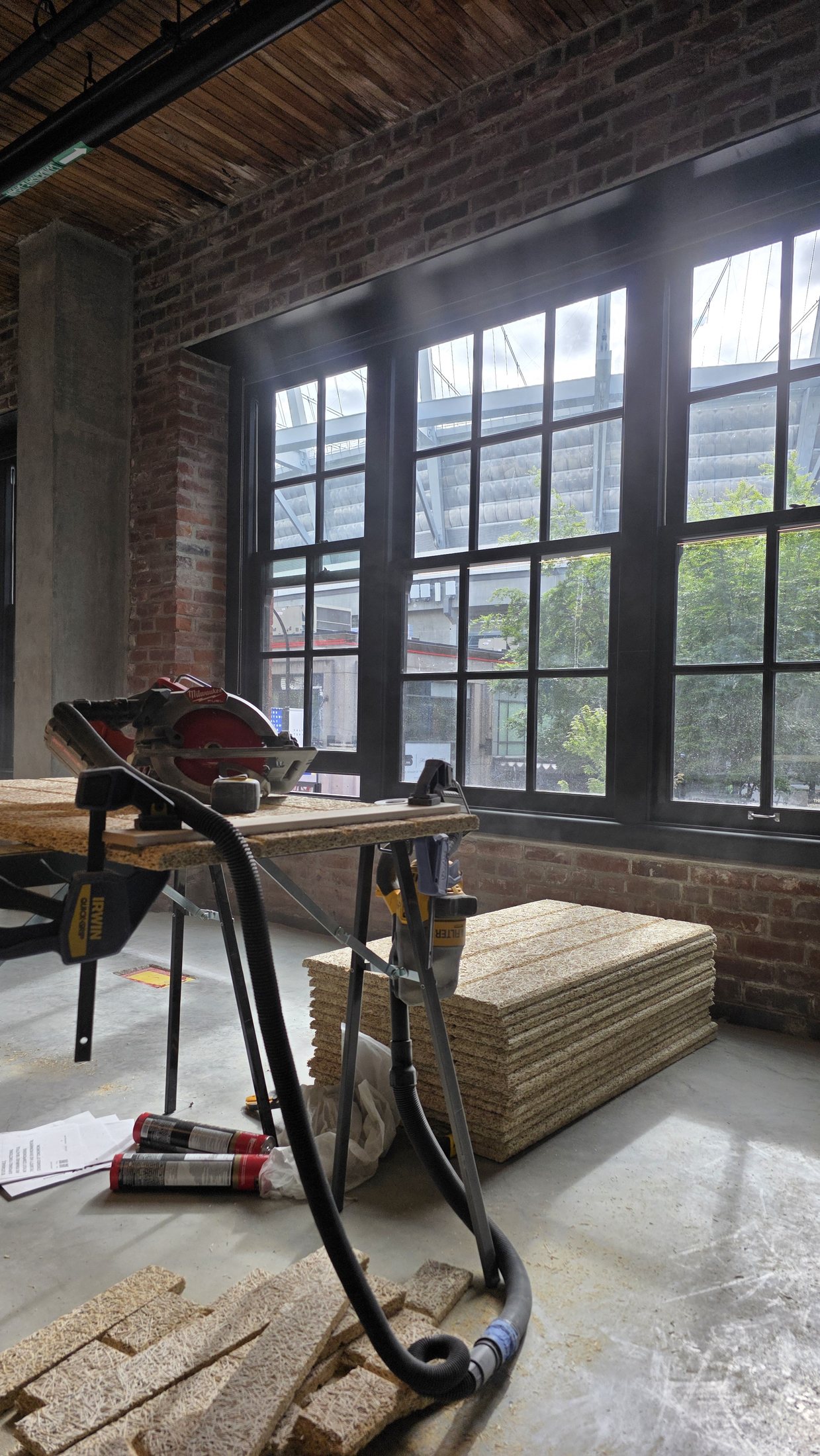
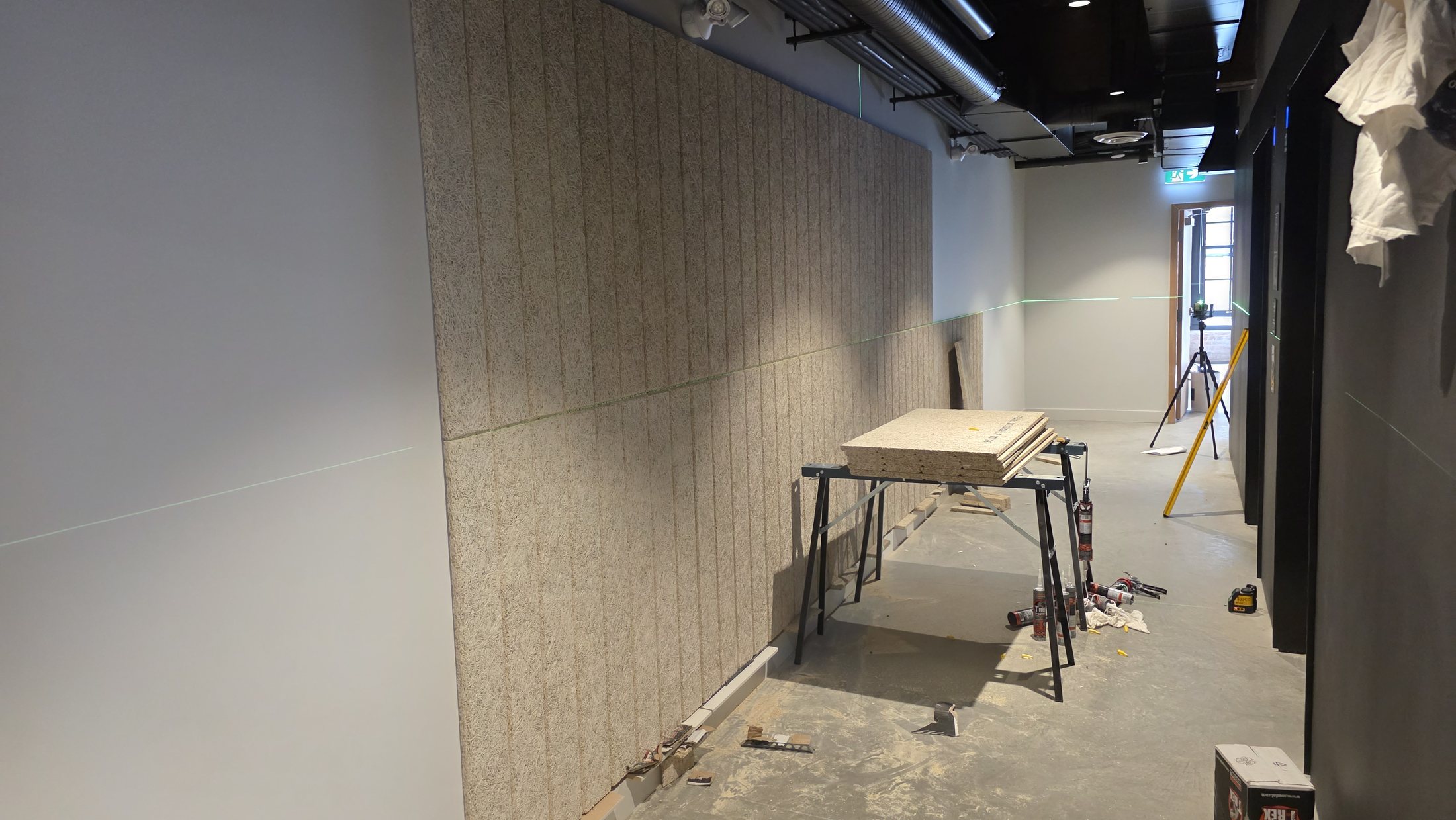
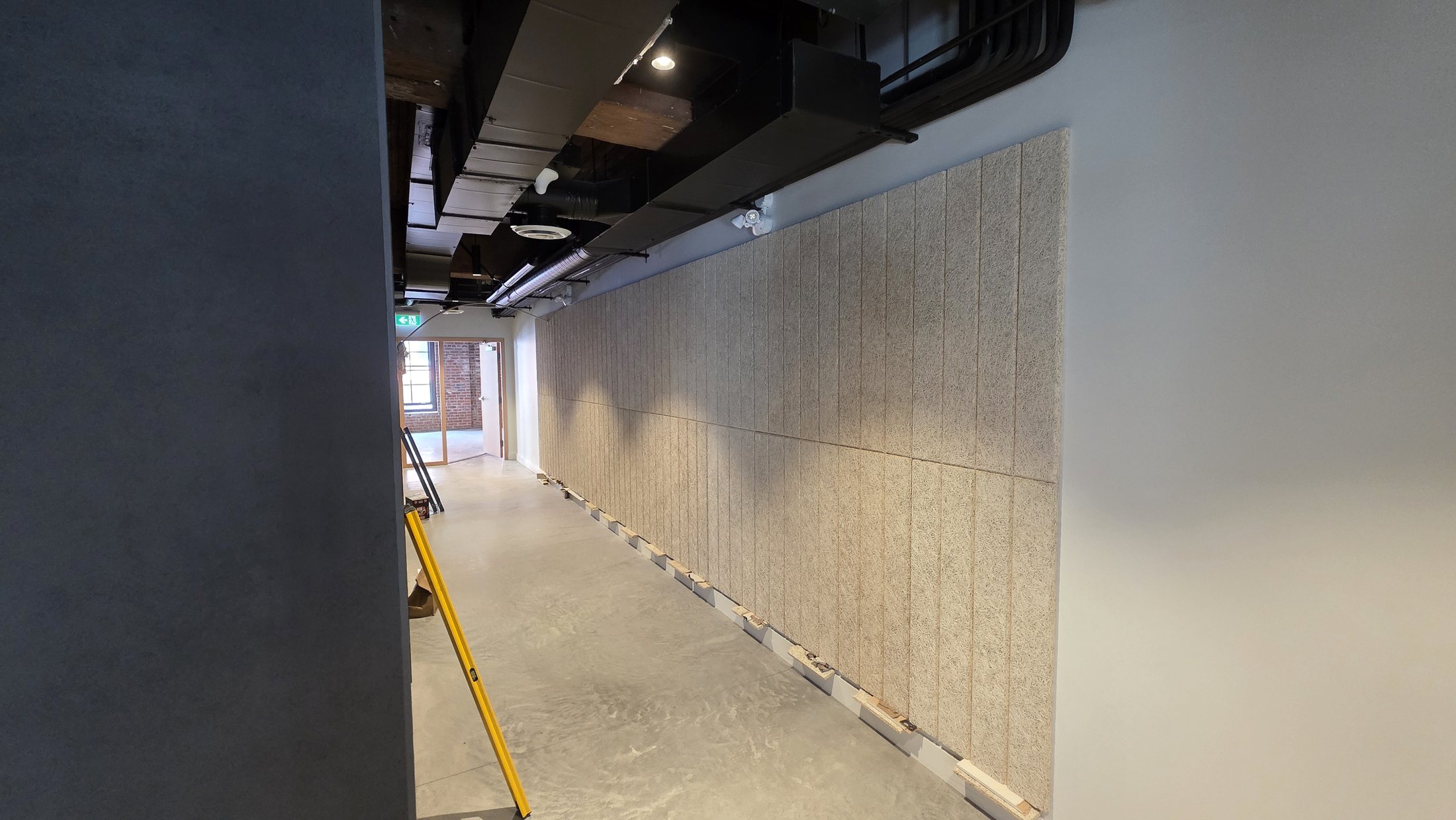
Offices and meeting rooms
Schools and learning spaces
Restaurants and hospitality
Studios and high-reverberation rooms
What changes the result?
Wood-fibre, felt, fiberglass and mineral-fibre panels
Wall-mounted versus ceiling-mounted applications
Panel size, thickness, edge and joint pattern
NRC and mounting-condition differences
Direct attachment, clips, rails and suspended mounting
Impact, cleaning, colour and finish requirements
Plan the ceiling as a shared plane.
01
Treat acoustic panels as part of the architecture. Panel size, joint rhythm, edge profile and colour can organize a wall or ceiling while adding useful absorption.
02
Mounting condition matters. An airspace or absorptive backing can change tested performance, so an NRC value should stay tied to the exact tested assembly.
03
Panels near doors, circulation routes or public areas need realistic durability, cleanability and edge protection. A fragile product that looks right in a sample may be wrong at human height.
INSTALLATION PLANNING
Good ceiling work starts before the ceiling goes in.
The finished ceiling often has to coexist with structure, mechanical systems, electrical work, sprinklers, lighting, speakers, access panels and wall conditions. Early coordination reduces field cutting, rework and compromised layouts.
Confirm the substrate, layout datum, panel sequence and edge condition before installation.
Coordinate outlets, switches, signage, sprinklers, lighting and other penetrations so panel cuts remain intentional.
Use the selected manufacturer’s fasteners, clips, adhesives, tolerances and tested mounting details.
ROOM + QUANTITY TOOLS
Sketch it, visualize it, calculate the first pass.
Use the ACUSTIQ visualizer to enter room dimensions, explore system style and finish, add lights, diffusers, sprinklers and access items, and create early system quantities. Detailed estimating can be passed into Estimators.io when the project needs a full takeoff and commercial workflow.
Open ceiling visualizerLOWER MAINLAND INSTALLATION
Featured Regional Installer
Rambo Walls & Ceilings is ACUSTIQ's featured regional installer for Vancouver and the Lower Mainland, providing a direct path from system research into field pricing, coordination and installation.
Vancouver ceiling installationFREQUENTLY ASKED QUESTIONS
Acoustic Wall & Ceiling Panels FAQ
Do acoustic wall panels reduce echo?
They can reduce reflected sound and reverberation when the panel area, material and mounting are appropriate for the room.
Can the same acoustic panel go on a wall and a ceiling?
Some product families support both applications, but attachment, safety, fire performance and approved mounting methods must be confirmed for the exact product.
What is a Tectum acoustic panel?
Tectum is a wood-fibre acoustic panel family with a distinctive textured surface. Performance, dimensions, edge details and mounting options depend on the selected product and current manufacturer documentation.
VANCOUVER + LOWER MAINLAND
View Rambo contractor page